He’d booked the session to talk about money. Specifically, he wanted to know how to make the most of an ISA, how compound interest worked, and whether there was a way to claw back some breathing room before the next unexpected bill landed.
That’s not actually what the session ended up being about.
What he said he needed
On paper, his situation looked manageable. No credit card debt. No loans. A joint savings pot with a healthy five-figure balance. A stable job he’d held for years and genuinely liked. By most measures, he was doing better than a lot of people in their early thirties.
But he arrived at the call sounding like someone bracing for bad news that hadn’t happened yet. He used phrases like “scraping by” and “struggling” about a financial picture that, from the outside, had real strengths.
He’d recently had to replace his laptop and described it less like an inconvenience and more like a small crisis. He was a first-time homeowner a few months into a renovation that had gone sideways. Multiple tradespeople, multiple do-overs, a project that was meant to take ten days and was closing in on six weeks.
He wanted budgeting tips. He wanted to understand savings products better. He said, more than once, that he was “a complete novice” with this stuff.
What was actually going on
About ten minutes in, a different picture started to form.
He wasn’t wrong that budgeting confused him, it did, genuinely.
Numbers on a page, products with names like ISAs, the difference between an individual bank account and a joint one: none of it sat comfortably in his head, and he was visibly embarrassed about that, more than once apologising for not already knowing things he assumed everyone else just understood. But underneath that confusion was something heavier, a constant sense of being out of control.
A house project he didn’t fully understand the terms of.
A household where he’d quietly cast himself as “the lower earner,” the less capable one, the one who just tries to keep his head down and get through the month.
Every time the conversation moved toward a number, he’d defer: “she’s more clued up with that,” “she’s handling that side of things,” “I’ll leave that to her.” Not with resentment, more like it had become a settled fact about who he was in this partnership. We all have roles, I’m the admin, calendar organiser, IT department in our house. But when it comes to money, it’s really got to be a team effort and ours certainly is.
The laptop problem wasn’t really about the laptop. It was a stand-in for a feeling: that life kept throwing things at him faster than he could prepare for, and that he didn’t have the tools, or the confidence to push back.
The solution that wasn’t on the agenda
He didn’t need a masterclass in ISAs, thank goodness for me as product specific support isn’t what people need me for. He needed two much smaller, much more achievable things.
The first was permission to feel less ashamed. Naming, out loud, that having no debt and five figures in savings while going through a brutal renovation isn’t financial failure, it’s just a hard 12 months. This recognition did more for him in thirty seconds than any spreadsheet could have. He visibly relaxed when I simply said: you’re actually in a good position, even though it doesn’t feel like it right now.
The second was a method, not a lesson. He mentioned, almost as an aside, that he’s a visual learner, that he likes to write things down and see them. So instead of explaining percentages and interest rates, we built a plan around post-it notes and a calendar. Months written out. Expected costs sketched in. A rough shape to the chaos, something he could literally see on his fridge instead of carrying around in his head.
He left calmer. Not because his renovation problems were solved, they weren’t, not even close, but because he now had a way to make the unknown feel slightly less unknown. Just to have that permission that he’s on a learning trip, like most of us are, to gain more life knowledge by not being afraid to ask questions until the answers made sense, was a real awakening.
The bit that’s still unfinished
There’s a thread we didn’t get to pull on, not in one short session. The way he talked about his role in the relationship, the lower earner, the one watching his partner do all the heavy lifting while quietly thinking she shouldn’t have had to. It sounded less like a financial issue and more like a partnership figuring out, under pressure, how two people share both money and decision-making. And that, as many of us know, is a BIG thing to get right.
That’s not something a single conversation about budgeting was ever going to fix. But it’s worth naming, because it’s a reminder that when someone asks for help with money, they’re not always asking for the thing they think they’re asking for. Sometimes the real ask is quieter: tell me I’m not failing, and give me something I can actually hold onto.
A lot of financial advice assumes the problem is a lack of information, and that the client is simply not doing the thing that makes sense logically. That if they just understood ISAs, compound interest, or budgeting categories well enough, the anxiety would lift on its own. Sometimes that’s true. More often, especially when someone is mid-crisis, the numbers are the symptom, not the disease. The real work is steadying someone enough that they can think clearly, then giving them a structure simple enough to actually use when life is still chaotic.
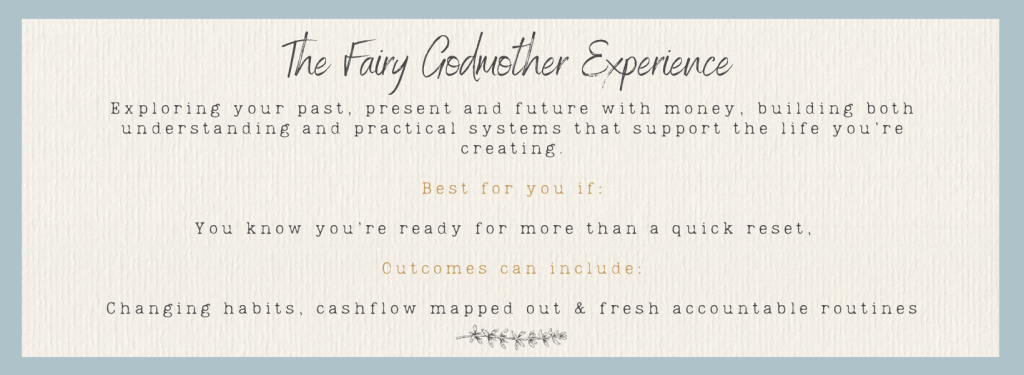
That’s the whole premise of this experience: not a magic wand, not “here’s your budget, off you go” and stick to it, but a relationship that holds both the practical and the emotional at once, over more than one sitting, because almost nobody untangles their relationship with money in thirty minutes.
THE EXPERIENCE is designed specifically for someone who needs a bit more unravelling to get to the nugget of the problem. For the person who is really unconfident in their abilities to grasp this, or the person who knows that everything feels like a mess and they don’t know where to start.
Here’s how the next two sessions unfurled for him:
Session two: Naming the real picture, together.
With the panic of session one settled, and trust built, this is where we’d actually open the spreadsheet or rather the post it’s & notebooks. We mapped out the renovation timeline he’d started sketching on post-its, layer in the eventual rental income, and turn “I think we could understand it and talk through it” into an actual shared document both of them use. This is also where I gently test what he really understands about products like ISAs, rather than assuming not to catch him out, but so the explanations land at the right altitude instead of past him. Something he can approach in a few months when the biggest stressor has subsided. And, crucially, where to go for this kind of support.
But the point of this session is to reveal the numbers, as they are, and start to point them towards the end goal. And end goals will change, but this process can be repeated. It’s sustainable.
Are the bank accounts lined up to accommodate these goals? Are they simple, clear and user friendly? Do both partners know what they are contributing to, how much and how exciting this is?
Session three: Rebuilding his seat at the table.
This is the session that isn’t really about money at all, even though it’ll look like it is. We talked about what it’s meant for him to have created this role. Not couples therapy, that’s not my lane, but enough space to ask: what would it look like for you to feel like an equal architect of this plan, not a passenger in it? Often, that single shift in how someone sees their own role does more for their financial confidence than any spreadsheet ever could.
By the end of three sessions, the goal isn’t that he’s become a finance expert with everything in place. It’s that he walks into his next unexpected repair, leak, or invoice with a place to put it. A plan he helped build, a voice he trusts using, and the quiet knowledge that he’s not scraping by. He’s just in the middle of something hard, with someone in his corner until it isn’t.
Three sessions of practical financial mentoring delivered with lashings of emotional intelligence. We take things at your pace overcoming any anxiety about maths or tech.
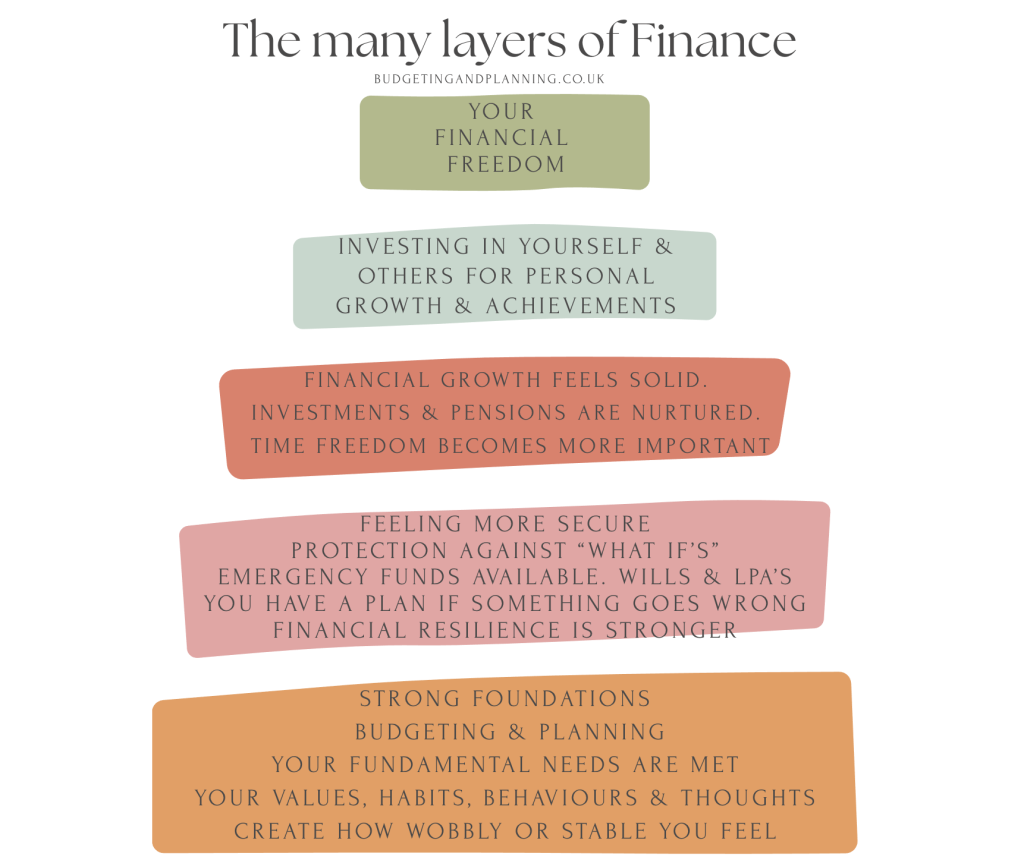
Your season of life is now putting you in the spotlight to manage your finances, let’s lay the best solid foundations for you.
We’re renovating, slowly, our barn and home that we bought 6 years ago. My husband is an architect, I know, I’m lucky! BUT we have a smaller than expected budget, long story for another time, so it’s been essential that we seriously keep an eye on the pennies & euros.
Here’s the thing;
He has been using a spreadsheet for decades for his architectural business projects. It’s a bit serious for most of our home based tastes, but I wonder, if I were to create a gorgeous user friendly version, if you’d love this to manage all kinds of projects with?
Do let me know in the comments OR pop your email address into here so that you get my fortnightly emails! This way, you can be involved in the creative process as I often ask my lovely penpals questions about what they’d find most useful, so I create what is truly wanted.
Until next time
Lucy x
ps. my characters are always a mash up of real clients not one person’s story unless I have their permission.
Thrilled to be asked to guest speak on Investing Insiders Podcast, I’ll confess that I was a bit nervous. Investing is not my forte; I’m not without knowledge but it’s nowhere near podcast levels. But that’s not why they wanted me.
Brean Horne is a wonderful finance writer and the host of this epic podcast. We had planned around 10 questions and then we got carried away, on a tangent, like the best conversations do!
Budgeting, planning, having a direction or vision (goals), learning how to make the numbers work in real life, and improving one’s relationship with money is the starting point to a life that feels financially rich – even if the numbers suggest a slightly different reality. After all, what really is “enough”?
I don’t think there’s enough oomph in this area!
The basics, fundamental money training is often glossed over, which is why I love it so much and why I work in this space. And how, via a bit of fun whilst networking, I became The Fairy Godmother Of Household Finances. It was either that or Nanny McPhee 🤓 need and want etc…
This will whisk you away to where I’ve created a thoughtful self assessment, to help you refine where you think you stand, and what your next steps could be. You’ll get a lovely summary, plus a deeper version to your email inbox should you wish it.
This podcast was a joy to be part of so I want to wholeheartedly thank Brean Horne of Investing Insiders UK for inviting me on. And because it’s a 45 min edition I wanted to summarise my 5 favourite points below.
If this whets your whistle then you can head over to my Substack to read the longer version & feel free to download the podcast & give it a lovely ⭐️⭐️⭐️⭐️⭐️ rating.
My 5 Q&A’s to share out of the 12
Q: What reasons make people feel they can’t talk about money as they get older?
The teenage years can change everything you’ve known thus far. When my parents divorced in the late 80’s this was quite unusual back then. I had to use lunch tokens at school and the mean girls loved that! That stigma can attach itself to you, because the meaning of money shifts with every season of your life. And teens can see you used to be dropped off at school in a posh car, but now you’ve got lunch tokens. That’s juicy gossip and they’re not letting that go!
Then university debt can layer on top until your first proper job arrives and suddenly a bank is offering you what feels like free money! Overdrafts and credit cards don’t come with training on how to use them. And unless you really know what you’re doing, £1,000 spent on bits & pieces becomes £1,200, becomes £1,500, and you can find yourself in an ever-decreasing circle if you’re not careful.
Money can become the enemy. When your young adult brain realises that you work really hard but you still can’t have the instagram lifestyle you dream of, a bit of resentment can kick in. Without the emotional intelligence learned by experience, this is an age where your habits set the tone for the next decade.
Getting older can exacerbate the thought pattern of being disappointed that you haven’t achieved things. Or you haven’t got The House of your dreams. Or you did have the things for a while, but circumstances changed everything you knew, so you’re now living smaller. You can feel like you’re failing when your expectations don’t match your reality.
Comparisonitis is often still there. Feeling grief for a life that has passed you by that hasn’t worked out as you thought. This stuff makes it hard to talk about money because it intertwines with feelings of self worth. When your pride takes a fall, life gets questioned.
Q: How do people take that real step to make a change rather than just putting a plaster over it?
It’s often down to a big identity shift that can happen around a milestone birthday, approaching 30, 40 or 50 when you want to become a version of yourself that has things a bit more together. When you’ve been kicking problems down the road, at some point they meet you around every corner and it starts to feel heavier. That’s when shame and guilt can kick in, the “I should have dealt with this sooner” feeling.
But we’ve all done it. I wanted to go on holiday with friends in my 20s, didn’t have the savings, put it on a credit card. It’s part of learning, usually the hard way!
I think for many of us, if the learning doesn’t translate into new actions and new ways of doing things, we keep doing the same things, aka the definition of madness. Or, we find ourselves trapped in a lifestyle we really wanted but can’t afford anymore.
It takes a lot of courage to make a change.
Having to say no to things. Downsizing your home & changing new cars for second hand when it feels like all around you, the trajectory is only upwards feels like you’re driving the wrong way down a one way street.
If your identity around money no longer fits who you are, or who you want to become, you can change this. If you want to be the kind of person who has a comfortable home and no debts, who feels in control and steady with money every day then that’s an identity shift. When you see yourself as this person, you’ll create better habits, routines, and make different decisions. Then you’ll become that version of you.
It’s like looking at a slender, strong, and healthy body shape and wanting so badly to look that way. You have to become the person who does the things, that make them look like that. That’s an identity shift.
Q: How do you separate where you are financially from the shame and judgment around it?
Language matters enormously, and there’s neuroscience behind this.
When you say “I’m in debt” this feels very different from, “I have some debt”
This reframe keeps your identity intact. The real challenge is bridging the gap between knowing and doing and that gap can feel impossible. I always compare it to getting on the scales when you’ve been avoiding it. You look down and can see even through a half glance you’re heavier than you thought. You exclaim “Right, that’s it! I’ll clear out all the naughty food” so you eat it all to get rid of it before Monday. By Thursday you’re giving in to the cravings for more.
Because you haven’t bridged that emotional gap. The “just do it, ” the just eat less & move more is certainly logical, but it’s largely useless here because your limbic system can veto your prefrontal cortex’s good intentions.
When there’s a real emotional charge, telling someone to “do a budget” will layer on pressure. This often results in inaction because it feels too huge a step to take. Or with an all or nothing approach, someone going all out for a few unsustainable weeks will revert to normal behaviour before too long.
Q: For someone new to budgeting, what is the first step to getting a system that works?
The word “budget” makes people recoil doesn’t it?! They think financial diet & deprivation. It’s not that at all!
Think of it like filling in a diary at the start of the year. Whose birthday is when? When’s the holiday? What’s coming up? Budgeting & Planning is just the same principle applied to money. Here’s our life, now let’s make the money fit the picture.
The first step isn’t letting the numbers tell you what you can do.
It’s deciding what you want to do and making the numbers work backwards from there. When you know you’re saving for a really wonderful family holiday, you stop wandering into a shop and coming out £50 lighter on things you’ve already forgotten you bought.
Every single thing you buy needs to matter, otherwise you’re just taking money away from things you said you wanted. You’re depriving yourself.
Likewise if you’re dreaming of things, of a life that isn’t attainable on the income you have, then something’s gotta give. Choosing lifestyle (or any) goals has to be achievable or you’re setting yourself up to fail.
Q: What are the alarm bells around using credit as a default strategy?
Credit isn’t the enemy, chaos is.
The not knowing, the not using it intentionally or strategically. Used well, credit is a brilliant ally. But “let’s bung it on the card” is never a spending strategy.
I worked with someone who permanently carried about £3,000 on her credit card. It bubbled up and down but always settled back there. She’d accepted it as her normal. Then we got the calculator out and looked at what her “bargain” sale purchases had actually cost her with interest added over time….
That said, spontaneity is one of many sparks of joy in life! We can’t plan everything nor should we.
If a friend rings about getting tickets to your favourite band, and it’s not in the budget, use your credit card if you’ve no savings, go, enjoy it!
Just fit it into your budget retrospectively and pay it back. You’ve still got to live!
Which is why having a savings pot for such things going forward is a gorgeous idea.
So if money isn’t the goal, what is? The goal is life: to have a good one. We’re only here for a short while. Make the most of it! Money is just the tool you use to shape that life. Or as my granddad used to say “It’s all an experience”.
Lucy prior
Are you shaping your own good life?
Until next time
Lucy x
ps. As many of us thrive in a community based on a particular theme, I’m looking to figure out the appetite for creating a Substack Kitchen Table Money Club. A low cost community with just the right amount of support, resources and training to make it a lovely place to belong.
Not too much that you feel like you’re missing things & feeling worse still! But just enough that you can pop in, download a guide, a toolkit, take part in some chats & get your questions answered. If this sounds like a good idea, can you pop an emoji or a comment below, so I can guage interest?
Used to determine whether a user is included in an A / B or Multivariate test.
18 months
_ga
ID used to identify users
2 years
_gali
Used by Google Analytics to determine which links on a page are being clicked
30 seconds
_ga_
ID used to identify users
2 years
_gid
ID used to identify users for 24 hours after last activity
24 hours
_gat
Used to monitor number of Google Analytics server requests when using Google Tag Manager
1 minute
__utmb
Used to distinguish new sessions and visits. This cookie is set when the GA.js javascript library is loaded and there is no existing __utmb cookie. The cookie is updated every time data is sent to the Google Analytics server.
30 minutes after last activity
__utmc
Used only with old Urchin versions of Google Analytics and not with GA.js. Was used to distinguish between new sessions and visits at the end of a session.
End of session (browser)
__utmz
Contains information about the traffic source or campaign that directed user to the website. The cookie is set when the GA.js javascript is loaded and updated when data is sent to the Google Anaytics server
6 months after last activity
__utmv
Contains custom information set by the web developer via the _setCustomVar method in Google Analytics. This cookie is updated every time new data is sent to the Google Analytics server.
2 years after last activity
_gac_
Contains information related to marketing campaigns of the user. These are shared with Google AdWords / Google Ads when the Google Ads and Google Analytics accounts are linked together.
90 days
__utma
ID used to identify users and sessions
2 years after last activity
__utmt
Used to monitor number of Google Analytics server requests
10 minutes
SourceBuster is used by WooCommerce for order attribution based on user source.
Name
Description
Duration
sbjs_migrations
Technical data to help with migrations between different versions of the tracking feature
session
sbjs_session
The number of page views in this session and the current page path
30 minutes
sbjs_udata
Information about the visitor’s user agent, such as IP, the browser, and the device type
session
sbjs_first
Traffic origin information for the visitor’s first visit to your store (only applicable if the visitor returns before the session expires)
session
sbjs_current
Traffic origin information for the visitor’s current visit to your store
session
sbjs_first_add
Timestamp, referring URL, and entry page for your visitor’s first visit to your store (only applicable if the visitor returns before the session expires)
session
sbjs_current_add
Timestamp, referring URL, and entry page for your visitor’s current visit to your store
session
Marketing cookies are used to follow visitors to websites. The intention is to show ads that are relevant and engaging to the individual user.
Pinterest Tag is a web analytics service that tracks and reports website traffic.
Registers a unique ID to keep statistics of what videos from YouTube the user has seen.
Session
DEVICE_INFO
Used to detect if the visitor has accepted the marketing category in the cookie banner. This cookie is necessary for GDPR-compliance of the website.
179 days
LOGIN_INFO
This cookie is used to play YouTube videos embedded on the website.
2 years
VISITOR_PRIVACY_METADATA
Youtube visitor privacy metadata cookie
180 days
GPS
Registers a unique ID on mobile devices to enable tracking based on geographical GPS location.
1 day
VISITOR_INFO1_LIVE
Tries to estimate the users' bandwidth on pages with integrated YouTube videos. Also used for marketing
179 days
PREF
This cookie stores your preferences and other information, in particular preferred language, how many search results you wish to be shown on your page, and whether or not you wish to have Google’s SafeSearch filter turned on.

















Recent Comments